


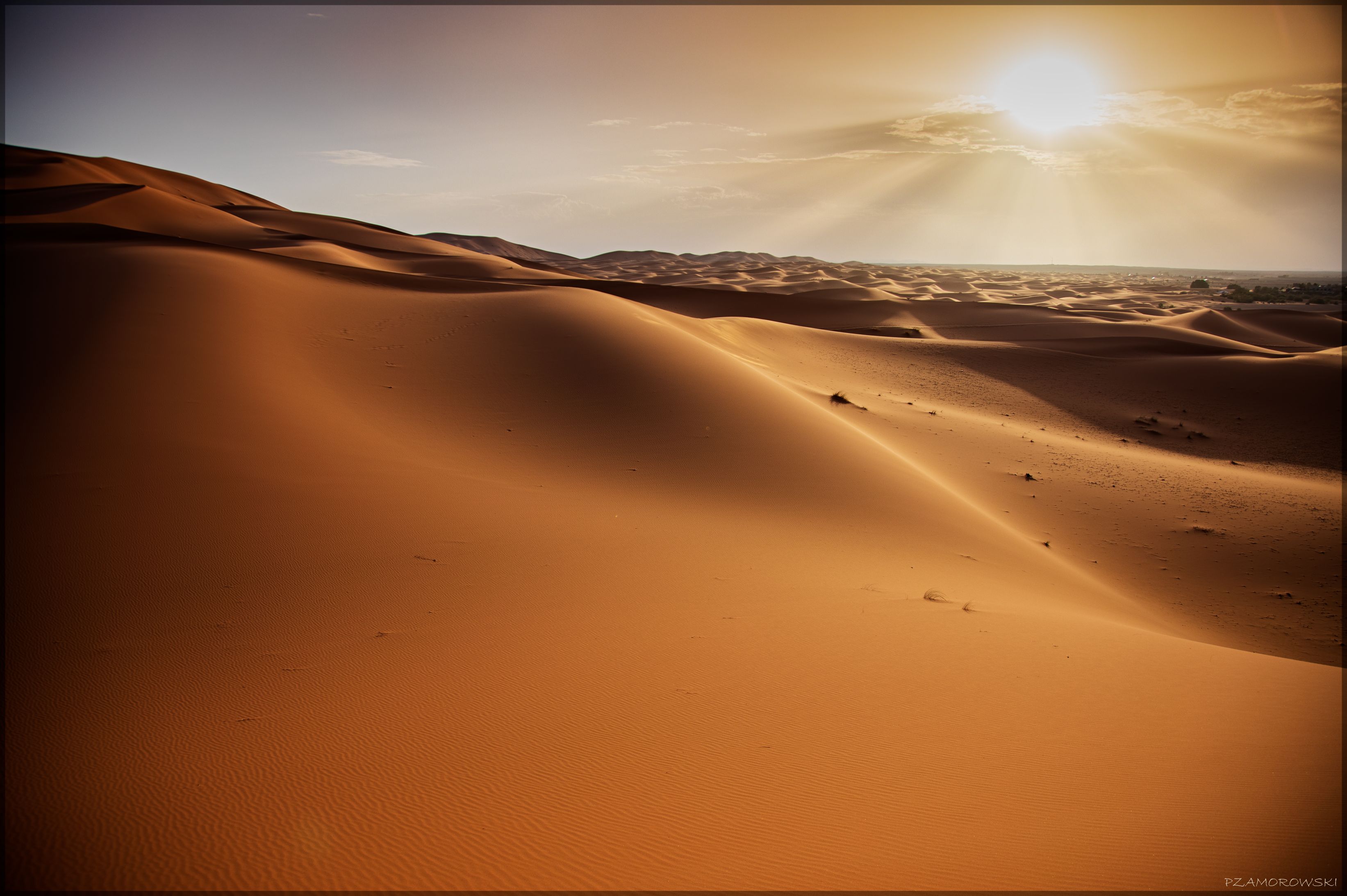
The Sahara Desert: The Enigmatic Ballet of Sand and Shadow in Photography
Bathing in a sea of infinity, the Sahara Desert, the world’s largest hot desert, sprawls across North Africa, showcasing an ocean of sand that seems to stretch beyond eternity. At first glance, one might perceive an inhospitable wasteland where opportunities for photography are confined to shots of endless sand and desolate landscapes. Yet, the allure of this golden expanse lies in its bewitching simplicity and the ethereal ballet of sand and shadow that unravels under the burning desert sun.
The Sahara is a dynamic canvas that changes with every passing moment. Each grain of sand is like a chameleon, adapting and reflecting the moods of the heavens. With each gust of wind, the dunes shift and morph, an unending dialogue between the elements. These shifting sands echo the words of the famed photographer Ernst Haas, who said, “Every sand dune is different, and with the changing light of day, they all play a different melody.”
The magic of the Sahara lies in the ever-changing, never-ceasing play of light and shadow. The sunrise paints the sands with soft pink and gold hues, illuminating the world in ethereal light. As the day wears on, the sun travels its arc, casting shadows that lengthen and shorten, shaping a theatre of ever-changing topographies that offer many photographic opportunities. The receding light of the setting sun sets the sand aflame, a blaze of amber and crimson.
In Sahara’s stark simplicity, the eyes of the beholder are free to perceive the dramatic interplay of the elements. Distant dust devils twirling like ethereal dancers, mirages shimmering in the heat haze, or the sudden storm that veils the desert in a shroud of mystery – all these provide additional textures and narratives to the grand Sahara story.
As Ansel Adams asserted, “A photograph is not an accident – it is a concept.” The Sahara challenges the photographer’s creativity and imagination to see beyond the apparent desolation to envision the dance of life and elements that it cradles within its vastness. It’s a testament to Edward Steichen’s words, “A portrait is not made in the camera but on either side of it.”
Venturing into the desert, armed with a camera, is to dive headfirst into a world where time stands still, where every dune, every shadow, every hour builds a new scene, a new story waiting to be captured. It is the ultimate game of patience and creativity, and the rewards are immeasurable at the end of the day. In its enigmatic beauty, the Sahara is not just a sea of sand but a symphony of life played out in silence, an eternal ballet of light and shadow that dances to the universe’s rhythm. It’s an unforgettable tableau of nature’s artistry, forever etched in every photographer’s heart fortunate enough to witness it.


